



Pluralistic Leadership did not begin as a theory.
It began as a practical question about how philanthropic institutions interpret reality and who is authorized to decide what counts as legitimate knowledge.
There are moments when a field is forced to confront itself.
The dismantling of DEI infrastructure. Executive orders targeting universities and nonprofit institutions committed to racial justice. Philanthropic leaders recalibrating language or pausing experimentation in the name of fiduciary caution.
For some, this was political.
For me, it was diagnostic.
It revealed something deeper than rhetoric.
It revealed where authority actually lives.
When pressure rose, many institutions did not simply adjust language. They reverted to the structures that govern decision-making. Statements shifted. Initiatives paused. Risk tolerance narrowed.
Authority held.
That moment clarified something I had been observing for years.
The Pattern Beneath the Outcomes
For most of my career, I have worked at the intersection of culture, systems, and justice. I began as a social worker, built community-based institutions, supported social entrepreneurs bringing bold ideas to form, and partnered with philanthropy as a collaborator, grantee, and trustee.
Across those roles, I witnessed a consistent pattern.
Extraordinary proximate leaders navigating closed capital networks. BIPOC-led organizations outperforming with fewer resources — yet rarely reaching sustainability. Community-rooted innovation assessed through frameworks never designed with them in mind.
I experienced these dynamics firsthand — first as a founder navigating philanthropic gatekeeping, and later as a candidate for senior leadership roles within the sector. Despite qualifications, experience, and sector credibility, access to fiduciary authority remained narrow. The rhetoric of diversity, equity and inclusion rarely translated into structural change.
The issue was not effort.
It was not talent.
It was not readiness.
It was design.
This was not incidental.
It was structural.
And structures can be redesigned.
Expanding the Lens
In 2024, I began doctoral work at the USC Suzanne Dworak-Peck School of Social Work with a focused inquiry:
Why do race-based funding disparities persist within philanthropy — even inside institutions committed to equity?
I did not step away from practice. I expanded my lens.
Scholarship, field reports, leader interviews, and industry convenings sharpened the diagnosis. As the inquiry deepened, the frame widened.
I realized funding disparities were not only about grantmaking behavior.
They were about authority architecture.
Who holds fiduciary power?
Who defines risk?
Who determines legitimacy?
Whose expertise counts?
The past decade brought new language and new practices — trust-based philanthropy, participatory grantmaking, community advisory councils. These shifts matter.
But fiduciary authority itself remained largely untouched.
And authority — not aspiration — determines outcomes.
The rollback of DEI made that unmistakable. When external pressure rises, institutions revert to where authority is concentrated.
Not because individuals lack conviction.
Because governance design determines resilience.
The Deeper Diagnosis
The deeper diagnosis was leadership homogeneity.
Across philanthropy — particularly family foundations — fiduciary power remains concentrated among individuals who often share similar wealth origin stories, educational pathways, and governance norms.
This is not about individual intent.
It is about institutional inheritance.
Leadership homogeneity is not merely complex.
It is a wicked problem.
It is embedded in bylaws and board design.
It is reinforced by donor intent doctrine.
It is shielded by fiduciary caution.
It governs power itself — and authority structures resist redesign. And not everyone agrees it is a problem.
Wicked problems persist because the architecture reproduces itself.
In conversation after conversation with foundation trustees and CEOs, I heard the same tension:
“We want to evolve. But we don’t know how to redesign authority without destabilizing the institution.”
That tension became the design brief.
At a certain point, diagnosis alone felt insufficient. If authority architecture was the root issue, then analysis was not enough. It required experimentation. The deeper design question became how institutions expand their institutional intelligence — their capacity to interpret complex conditions by integrating multiple forms of knowledge into governance.
From Diagnosis to Design
Pluralistic Leadership did not emerge as a slogan.
It emerged from a deliberate effort to test whether authority itself could be redesigned.
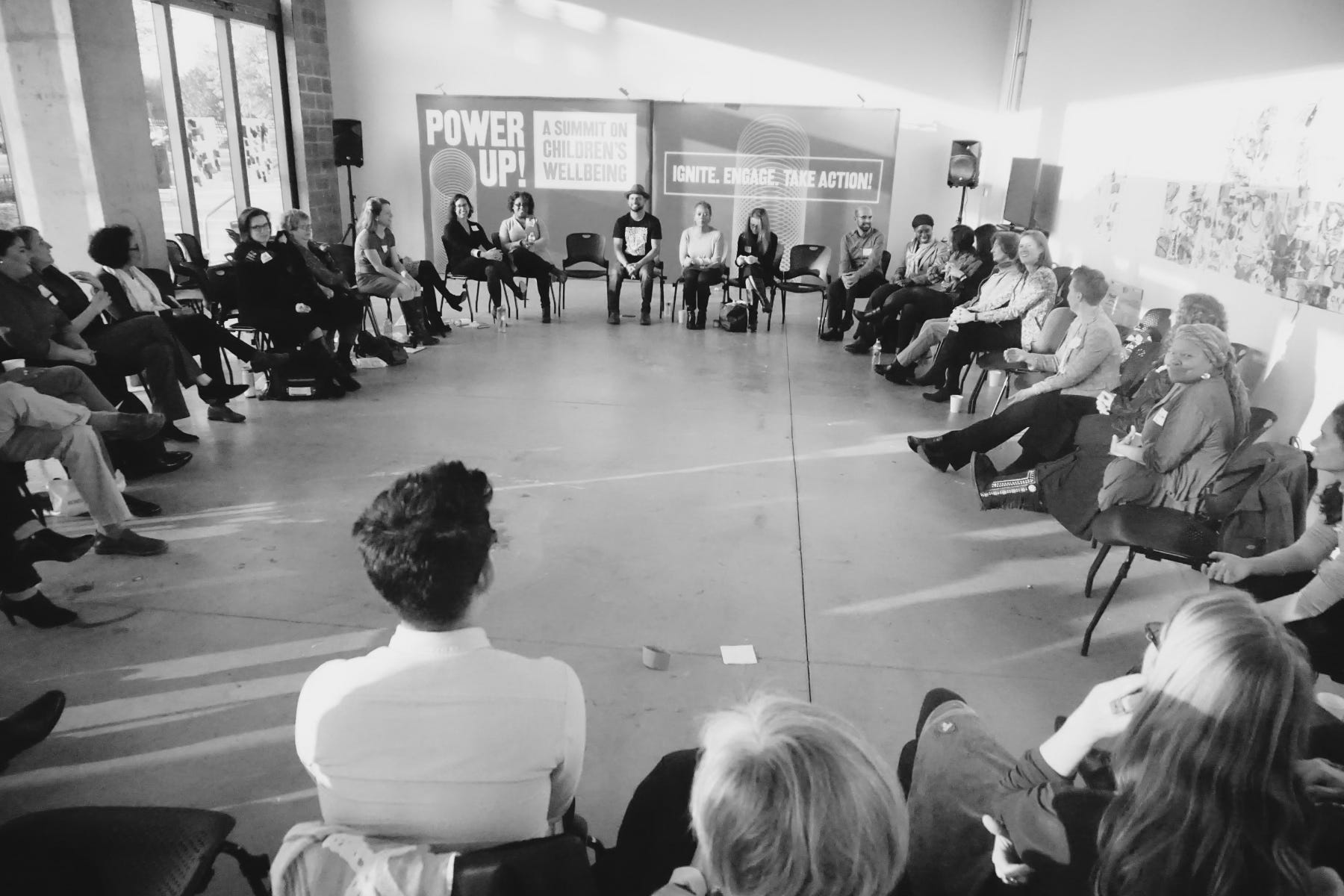
I began convening trustees, philanthropic executives, proximate leaders, and institutional designers to examine a central question:
What would governance look like if it were built for complexity rather than control?
Through structured dialogue, shared case analysis, and design iteration, we reached a clear conclusion:
Philanthropy cannot meet this era’s demands by expanding participation alone.
It must redesign how authority and expertise are structured within governance.
That effort became the Future Funders Initiative — a field-building platform expanding pathways into foundation board and CEO roles for proximate leaders while prototyping governance models capable of structured plurality.
Pluralistic Leadership (Version 1.0) is the first formal articulation of that work.
This framework may be stewarded by a few, but it must be stress-tested and refined by many.
What This Publication Hub Is For
This Substack — Pluralistic Leadership — is the publishing home of this body of work.
It exists to:
Document the evolution of the framework
Convene serious conversation about authority architecture
Move the field from aspiration to implementation
In the months ahead, this work will move from diagnosis to design to iteration — examining fiduciary authority, leadership capacities, governance trade-offs, and practical pathways for implementation within family foundations.
This is not a hot-take platform.
It is field architecture.
An Invitation
If you are a trustee rethinking governance, a CEO navigating board evolution, a philanthropic advisor confronting structural inertia, a proximate leader seeking fiduciary authority, or a scholar studying institutional resilience — this space is for you.
Pluralistic Leadership began as a question about funding disparities. It evolved into a structural inquiry about authority. It now stands as a field-building effort to design institutions capable of holding complexity and legitimacy in an age of polycrisis.
Institutional courage will not be measured by statements.
It will be measured by governance design.
This is Version 1.0.
Subscribe.
Share it.
Bring it into your boardroom.
Test it inside your institution.
Authority can be redesigned. And we are building the blueprint.
With respect for the work ahead,
—Tomás Alvarez III, MSW, BSW
Founder, Future Funders Initiative
Doctoral Candidate, USC Suzanne Dworak-Peck School of Social Work
About the Future Funders Initiative

Pluralistic Leadership is stewarded by the Future Funders Initiative — a field-building platform expanding pathways into foundation board and CEO roles for proximate leaders while prototyping governance models that integrate multiple forms of expertise into fiduciary decision-making.
If you are working to redesign authority inside philanthropy, we invite you into the work.
Learn more at:
https://joinfuturefunders.org/
